
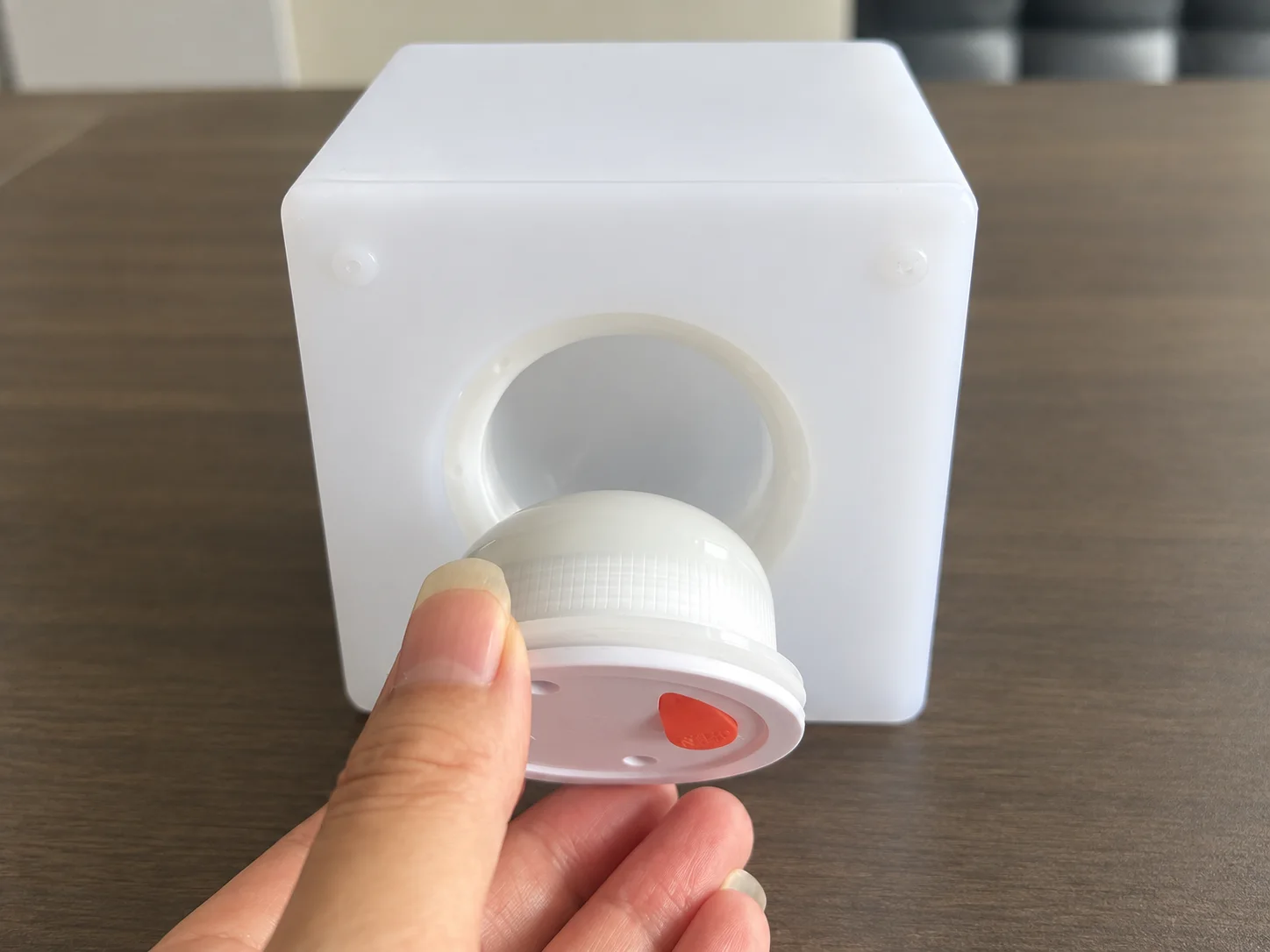
Real product-development case
Developing a Custom Rechargeable LED Module for a Portable Table Lamp
How a Ø65 mm lamp opening, 2200K CRI 90+ light, three-step dimming, rechargeable power and serviceability were translated into a practical sample-development brief.
An architect and product designer needed a complete internal LED and electronics assembly for a new portable table lamp. The goal was not a loose collection of components, but a rechargeable, ready-to-integrate light engine that could be installed through the lamp's approximately 65 mm bottom opening and serviced later. Compact LED modules can be integrated into many translucent or light-diffusing housings, but the fit, optics, charging access and thermal conditions still need to be matched to each enclosure.
A compact standard platform can shorten development, but this project cannot be selected by diameter alone. The mechanical envelope, 2200K CRI 90+ white light, three-step dimming, 8–10-hour runtime target, charging method and service access must be reviewed together and confirmed with a prototype.
Customer brief
The requested function was defined before selecting the hardware.
The following values document the development request. They are targets for engineering and sample validation—not published performance claims for a finished production module.
| Application | Custom portable table lamp |
|---|---|
| Lamp opening | Approximately Ø65 mm |
| Maximum available diameter | Approximately Ø70 mm |
| White light | 2200K warm white, CRI 90+ requested |
| Light character | Soft, even ambient light |
| Output | Approximately 1–2 W requested |
| Dimming | 100% / 65% / 35% / OFF requested |
| Target runtime | Approximately 8–10 hours |
| Charging | USB-C or magnetic charging requested |
| Serviceability | Replaceable battery and preferably a replaceable LED module |
| Initial production | Approximately 50–100 units, with potential for larger quantities |
| Project stage | Paid sample order and prototype review |
Mechanical fit
The opening size starts the discussion, but does not define the complete module.
The lamp had an approximately Ø65 mm opening and could accept a complete internal assembly up to roughly Ø70 mm, subject to the lamp geometry. The engineering check must separate the body diameter that passes through the opening from the flange, mounting method, diffuser, charging access and available depth.
A CAD drawing or physical lamp sample is the safest way to confirm clearances and decide whether the module should be removable from below or retained inside the lamp body.
Light quality
2200K and CRI 90+ change the LED and optical design.
A warm 2200K appearance and CRI 90+ are specific white-light requirements. They should be confirmed from the selected LEDs, driver current and diffuser—not assumed from a standard RGBW module. The prototype also needs a visual check inside the real lampshade because diffusion, material thickness and internal distance affect brightness and uniformity.
The requested 100%, 65% and 35% steps can be implemented as a simple product-specific control sequence, with OFF after the third brightness level. The final percentages and perceived difference should be checked on the sample.
Battery and charging
Runtime must be validated against the real power profile.
An 8–10-hour runtime target cannot be confirmed from LED wattage alone. Battery energy, driver efficiency, brightness level, thermal limits, protection circuitry and ageing margin all affect the result. The sample should be measured at each dimming level before the battery configuration is approved.
USB-C provides a familiar physical charging interface, while a magnetic connector can reduce repeated handling of a recessed socket. Either option still requires a matched charging circuit, safe lithium-battery protection and suitable product access.
Starting platform
A 60 mm module is a useful reference—not a confirmed final solution.
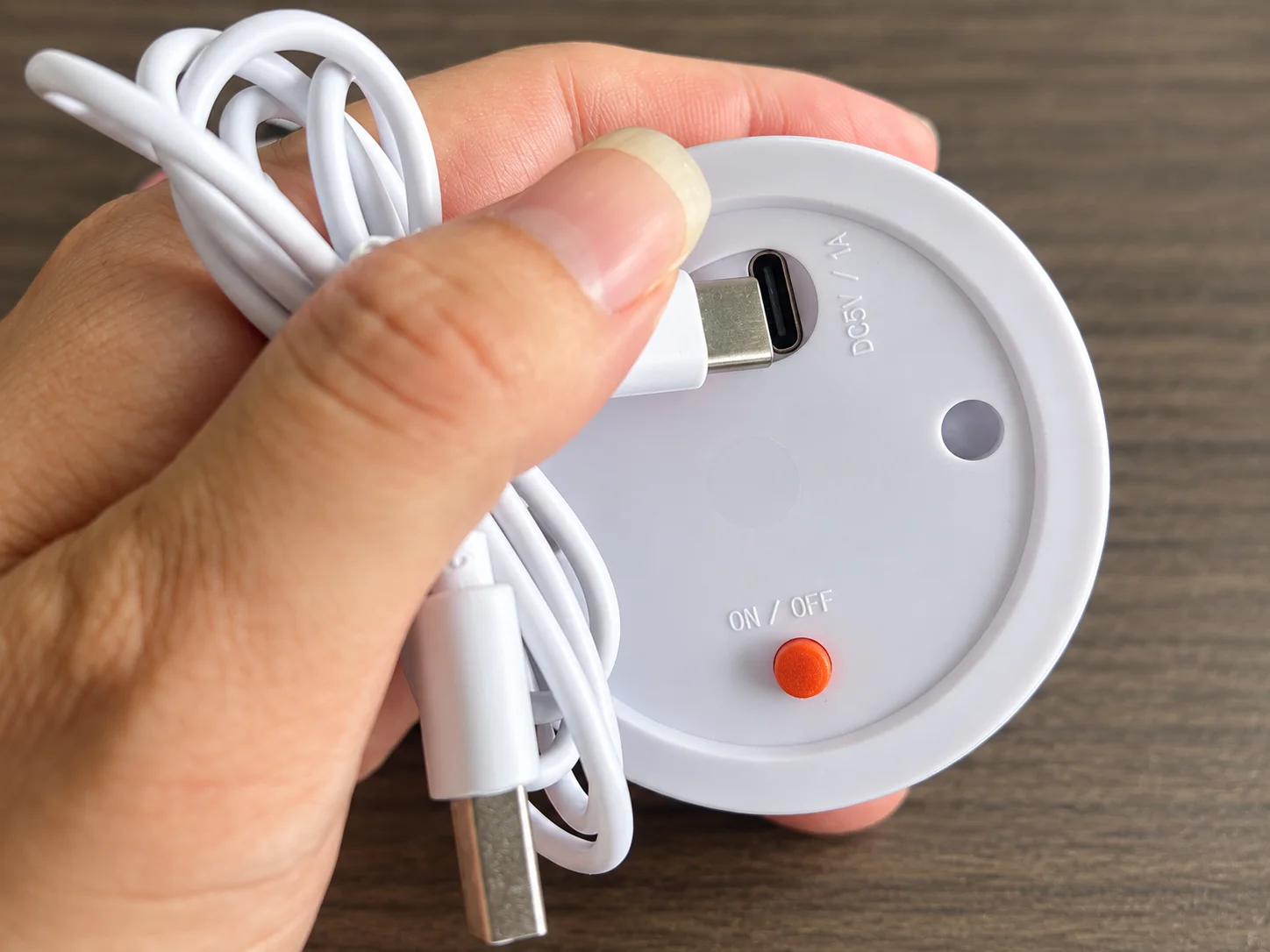
Standard VC-LS60 uses a compact rechargeable RGBW architecture with a USB-C or DC charging option. For this project, the platform can inform packaging and service access, while the 2200K CRI 90+ light source, dimming logic and runtime target must be treated as custom requirements.
Prototype path
The sample order turns the written brief into measurable decisions.
The inquiry progressed to a paid sample order. That confirms a real development need, but it does not by itself confirm final production performance. The prototype stage should verify fit, light distribution, CCT and CRI, dimming, runtime, charging, temperature and service access inside the actual lamp.
After approval, the production design can be reviewed against the proposed initial quantity of 50–100 units and the potential for a larger run. Custom component, PCB, tooling or certification requirements may affect the final MOQ and schedule.
Developing a rechargeable lamp or illuminated product?
Start with the opening, available depth, target light, runtime, charging preference and estimated quantity. Vcan can compare the brief with a standard platform and identify what needs to be customised.
Questions
Before developing a custom portable lamp module.
Does a 65 mm lamp opening require a 65 mm LED module?
Not necessarily. The part that enters the opening, the outer flange, mounting points and available depth can all have different dimensions. A drawing or sample check is needed before confirming the housing size.
Can the standard VC-LS60 be used unchanged for this lamp?
VC-LS60 is a useful 60 mm platform reference, but the requested 2200K CRI 90+ white light, dimming sequence, runtime, service access and mounting structure require project-specific review. It should not be treated as a confirmed drop-in solution.
Can a rechargeable lamp use 2200K LEDs with CRI 90+?
Yes, subject to LED selection, thermal design, driver current, diffuser performance and supply availability. A prototype should be checked for colour quality, brightness, heat and visual uniformity before production approval.
Is USB-C or magnetic charging better for a portable table lamp?
USB-C is familiar and easy to source. Magnetic charging can simplify alignment and protect the product design from repeated connector handling. The better choice depends on enclosure access, charging electronics, appearance, service needs and the intended environment.
What information is needed to review a custom lamp module?
Start with the opening diameter, available internal depth, a drawing or clear product photos, target light colour and brightness, runtime, charging preference and estimated quantity. Vcan can identify any additional detail needed for the sample.
This case describes a real customer requirement that progressed to a paid sample order. Customer identity and product-design details are omitted to protect project confidentiality. Dimensions and performance values are reported development targets. Final specifications require prototype testing and written production approval. For general selection criteria, see the rechargeable LED module buying guide.